Piacenza cuisine: history, typical dishes and local traditions
Piacenza cuisine tells the story of Piacenza and its province through simple flavours, hearty dishes and recipes handed down from generation to generation.
In this borderland between Emilia, Lombardy, Liguria and Piedmont, culinary culture has developed over time through the meeting of different traditions, while remaining deeply connected to the countryside, the hills and valleys such as Val Trebbia.
Tortelli con la coda Piacentini
Piacenza cuisine: a borderland tradition
The province of Piacenza lies at the western edge of Emilia-Romagna and borders Lombardy, Liguria and, for a short stretch, Piedmont.
This position has made Piacenza cuisine a natural meeting point between the Emilian tradition of cured meats and fresh pasta, the Lombard-Piedmontese tradition of boiled meats and meat dishes, and the Ligurian tradition, more humble but rich in herbs and vegetables.
At its heart, however, it remains a “land-based” cuisine: raw ingredients from fields, stables and farmyards, prepared with great care to waste nothing, following the logic of Northern Italy’s peasant cooking.
In the past, the expression “roba de Piasensa” was already used to indicate the particular goodness of certain local products, especially cured meats and cheeses, confirming a well-established gastronomic reputation.
From humble cooking to important tables
The roots of Piacenza cuisine lie in humble peasant cooking, made of simple ingredients and ingenuity in using them.
Stale bread was reused in preparations such as pisarei, small dumplings made with bread and flour, while less prized cuts of meat became the protagonists of stews and slow-cooked dishes.
Alongside this peasant dimension, there are also episodes showing how some Piacenza specialities were appreciated at noble courts too.
One famous example is the link between nobility and dishes such as bomba di riso, a rice timbale filled with pigeon meat and mushrooms, which tradition says appeared on the most important tables and in the households of noble families connected to the Piacenza area.
Piacenza PDO cured meats: the territory’s calling card
One of the most iconic elements of the culinary culture of Piacenza and its province is the tradition of cured meats.
The province of Piacenza is the only one in Italy that can boast three cured meats recognised with PDO status at European level: Coppa Piacentina PDO, Pancetta Piacentina PDO and Salame Piacentino PDO.
These products come from a long-standing craft tradition, favoured by a particular microclimate between the southern bank of the Po River and the Apennines, ideal for ageing.
Sources highlight how the combination of selected meats, salt, spices and long ageing times has helped create cured meats with an unmistakable flavour, which have become true ambassadors of Piacenza cuisine in Italy and abroad.
Typical first courses: pisarei, tortelli, anolini and more
Piacenza cuisine is also famous for its first courses, which clearly express the connection with the countryside and family life.
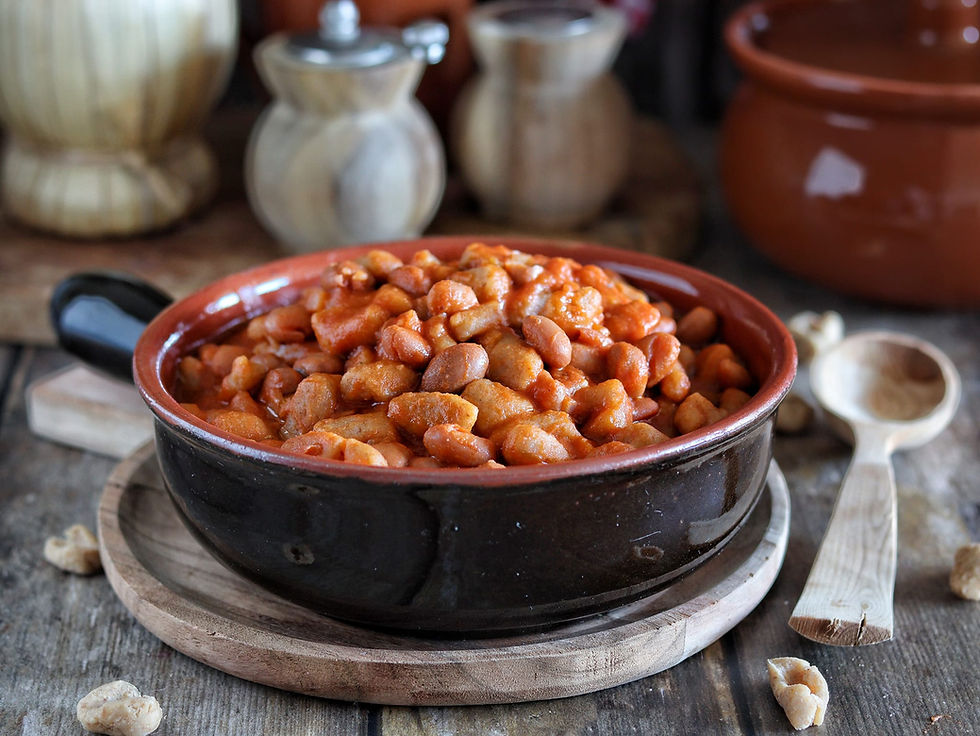
Pisarei e fasö are perhaps its symbolic dish: small dumplings made with bread and flour, served with a sauce of beans, tomato and lard, created to use up leftover bread and turn it into a nourishing and flavourful first course.
Tortelli con la coda are another classic of Piacenza cuisine: pasta filled with ricotta and herbs, closed in the typical braided shape that recalls a tail.
They require skill and time, and for this reason they are often linked to Sunday lunches and special occasions.
Anolini in brodo, or anvein, are the festive dish par excellence: stuffed pasta filled with meat, traditionally prepared with slow-cooked stew and served in a rich and flavourful “third” broth.
Piacenza tradition considers them a typical dish for important occasions, especially Christmas, when families gather to prepare them together and serve them as the first course of Christmas lunch.
In the Bobbio area and Val Trebbia, further specialities appear and enrich the picture.
In addition to maccheroni bobbiesi, special mention should be made of Pinoli bobbiesi: ricotta and spinach dumplings with an elongated shape that recalls a pine nut, served as a first course and traditionally dressed with flavourful sauces, often mushroom-based.
This is a rare preparation, deeply linked to the area of Bobbio and Val Trebbia, so much so that every year in August the Festa del Pinolo helps introduce it to visitors too.
Bomba di riso alla piacentina and festive specialities
Among festive dishes, bomba di riso alla piacentina, or bomba ad ris, stands out: a rice timbale filled with pigeon meat and mushrooms, baked until golden and crispy on the outside.
It is a dish traditionally linked to the Feast of the Assumption in August, when it was prepared for the celebrations in the middle of the month, and it can still be found today in some restaurants across the province.
Here too, the recipe combines simple ingredients, such as rice, meat and cheese, with a more elaborate preparation, designed for feast days and to bring family and guests together around a rich one-course dish.
Horse meat and donkey meat: dishes with character
A distinctive feature of Piacenza cuisine is the use, in some traditional preparations, of horse meat and donkey meat, especially in slow-cooked dishes, stews and sauces.
The term “carne asinina” is still used today in historic recipes and in the texts of the Accademia della Cucina Piacentina to indicate donkey meat intended for long-cooked dishes, often served with polenta.
Pìcula ’d cavall, or piccula ad cavall, is one of the best-known dishes of Piacenza cuisine: a stew made with minced or finely chopped horse meat, slowly cooked with a soffritto and tomato paste, almost always served with polenta.
It is considered an identity dish of the province and is included among the traditional agri-food products of Emilia-Romagna.
Many link the spread of horse meat in the area to Piacenza’s military past, as the city was historically home to barracks.
Horses used for work and by armies, once their service had ended, were sold and used for food: in this way, in times of poverty, an animal that had accompanied everyday life became a precious resource, enhanced through flavourful dishes and slow cooking.
This aspect too reveals the deeper logic of Piacenza cuisine: wasting nothing, transforming what is available into nourishing food and respecting the work behind it.
Wines from the Colli Piacentini and pairings
The culture of Piacenza cuisine is also closely linked to the wine tradition of the Colli Piacentini.
DOC wines such as Gutturnio, Ortrugo and Malvasia di Candia Aromatica are produced in the hills and have historically been paired with local cured meats, first courses and meat dishes.
Historical sources recall the presence of vines in the Piacenza area as early as ancient times, and symbols such as the Gutturnium cup found in the Po River confirm the deep bond between wine and territory.
Even today, it is hard to imagine a typical lunch or dinner without a glass of local wine, an integral part of the convivial experience.
A living tradition among trattorias, farm stays and local hospitality
Today, Piacenza cuisine has a double dimension: on the one hand, it is the everyday food of families and trattorias that continue to serve pisarei e fasö, mixed cured meats, tortelli con la coda, anolini in brodo and slow-cooked meat dishes; on the other, it has become a strong attraction for food tourism.
Those visiting Piacenza, the hills and valleys such as Val Trebbia can discover this tradition through typical menus, local festivals, village fairs and the proposals of farm stays and B&Bs in the area.
In this context, Piacenza cuisine is not just a collection of recipes, but a living part of local identity: it tells the character of the people, the bond with the land and the ability to transform simple ingredients into dishes that stay in the memory.